Latest posts
Compressing strings with FSST
Nov 9, 2024 · by Andrew Duffy · 17 min read
We’ve released our Apache-licensed implementation of FSST, you can check it out on GitHub!
Vortex is our
open-source Rust library for compressed Arrow. If you want to have compressed
Arrow arrays on-disk, in-memory, or over-the-wire, Vortex is designed to help
out.
Vortex opts for a columnar representation that is the same both on-disk and
in-memory, relying on a set of
lightweight compression
schemes that allow readers to just-in-time decompress the data you need, when
you need it. We’re building out a toolkit of open codecs to efficiently and
effectively compress the widest range of data.
Our initial focus has been on numeric codecs, and we’ve
written about our approach
using the FastLanes layout to compress integers at the bleeding edge of what’s
possible on today’s hardware. We’ve also implemented
ALP to compress
floating point arrays, as well as
Roaring Bitmaps.
However, not all data is numeric. String data is incredibly prevalent in the
real world. Apache Parquet, the most popular analytics data format, supports
compressing strings with dictionary encoding, along with a range of general
purpose compressors, which as we see later can be too heavyweight for use cases
that favor random indexed access to data.
More recently, there’s been renewed interest within the research community
around string compression in databases, and in this post we’re going to describe
a relatively new codec called
FSST.
FSST is fast–the reference implementation achieves gigabytes-per-second
decoding–and has shown to compress on average by a factor of 2-3x on many
real-world datasets. We're open-sourcing a
Rust crate for FSST,
and we've also
integrated it into our Vortex toolkit.
The next few sections provide a brief history of string compression, motivating
the need for a new lightweight string codec like FSST, and then provides a walk
through of the steps for compression and decompression.
String compression, in brief
String compression algorithms are not new, and you may already be familiar with
some of the more common ones such as Zip, LZ4, and Zstd. All of these operate
over blocks of data. Accessing individual values require decompressing the
whole block. If you're processing an entire block at a time, this may amortize
out, although recent research has shown that due to increasing network and disk
bandwidth,
reading these formats has become increasingly CPU bound.
The CPU overhead of reading block-compressed data is especially apparent in
applications that do lots of small random accesses across a column. Let's take
as an example an array with fixed 128KB blocks:
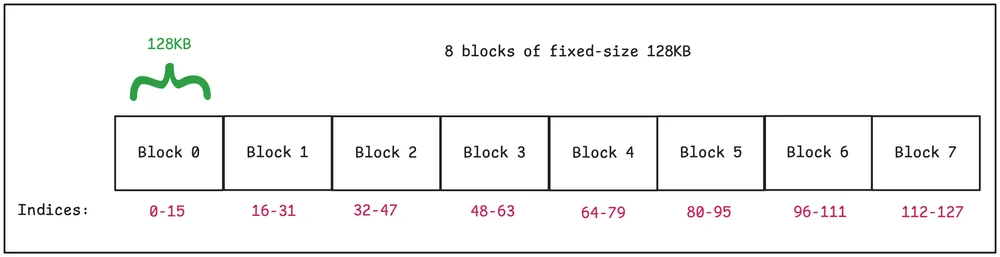
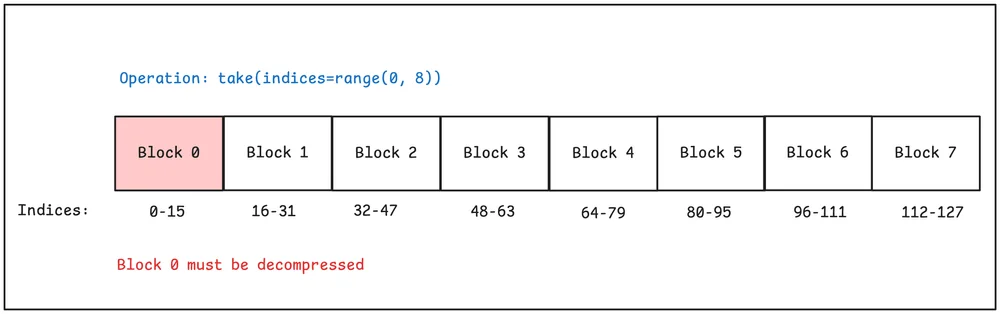
Let's say to service a particular query, we want to access 8 values, or ~6% of
the data in the array. In the best case–when the indices are clustered–we can do
so by only decompressing a single block.
However, if the indices are unclustered and spread out, then in the worst case
we must decompress the entire array!
![Same 8-block diagram with every block highlighted pink, captioned take(indices=[1, 16, 32, 48, 64, 80, 96, 112]) and All blocks must be decompressed!.](/_next/image?url=%2Fimages%2Fposts%2Fcompressing-strings-with-fsst%2Fcomp3.webp&w=2048&q=75&dpl=dpl_12GgURCTTk7z2i2LFW8VtEWjaYiT)
What we want for these more dynamic applications are codecs that support random
access. We want a data structure that efficiently implements the following
interface:
Rust
pub trait StringCodec {
  /// Decode and return the string at the given index.
  fn decode(index: usize) -> String;
}
This is a deep oversimplification of course, but a helpful one for demonstration
purposes. We’ll revisit this toy trait throughout the rest of the post to
illustrate how random access is implemented for different encoding schemes.
Dictionary Encoding
Dictionary encoding is probably the most well-known codec that supports
efficient random access.
It is also one of the simplest: perform a single pass over your data to find the
unique values, assign each value an integer code, and replace each occurrence
of that value with the code.
We can illustrate with a simple example that has 3 unique strings:
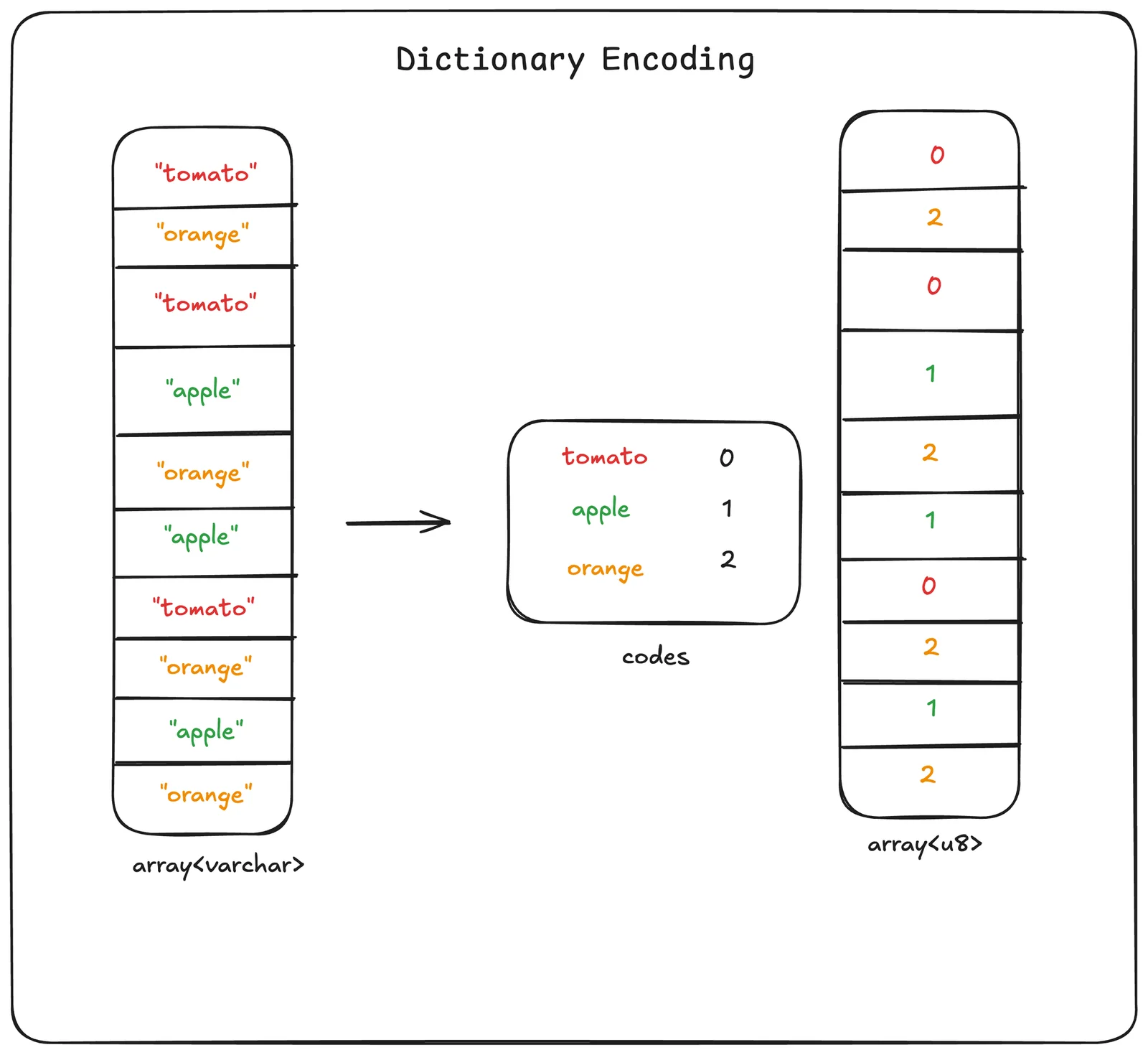
Implementing the single-element decoding just requires access to the dictionary:
Rust
pub struct DictionaryArray {
    /// The string at index `i` is replaced with the code `i`.
    /// Stored a single time at the top of the file.
    codes: Vec<String>,
    /// The encoded values. Each string is represented by
    /// an 8-byte code which is an index into the `codes`
    /// table.
    array: Vec<usize>,
}

impl StringCodec for DictionaryArray {
    fn decode(&self, index: usize) -> String {
        // Step 1: lookup the code in the `index` position
        let code = self.array[index];
        // Step 2: map the code back to a string
        self.codes[code].clone()
    }
}
Dictionary encoding is simple, and it performs excellently on many real-world
datasets, particularly for categorical columns such as labels and event names.
However, it’s not without its drawbacks:
-
Dictionaries only operate at the level of entire strings. If you have repetition that only manifests at the substring level, dictionary encoding won’t help you.
-
Dictionaries only compress well if your data is low-cardinality. As the number of unique values approaches the length of the array, dictionary compression becomes useless, and if you’re not careful it can even be larger than the raw dataset. This is especially pertinent for request logs, JSON records, UUIDs, and free text.
-
You cannot use dictionary encoding to compress data that is not in the dictionary; you instead need to build a new dictionary from scratch. This comes up if you’re building a system that cares about fast append operations, and appending chunks to an existing column with a shared dictionary is desirable.
FSST has entered the chat
The folks over at CWI in the Netherlands & TUM in Germany have been studying
databases for
a long time,
and in 2020 they dropped another banger:
FSST: Fast Random Access String Compression.
FSST stands for “Fast Static Symbol Table”, a new data structure to act as the
backbone for fast random-access string compression.
🎓 Peter Boncz, Thomas Neumann, and Viktor Leis. 2020. FSST: fast random access string compression.
Proc. VLDB Endow. 13, 12 (August 2020), 2649–2661.
https://doi.org/10.14778/3407790.3407851
Putting the ST in FSST
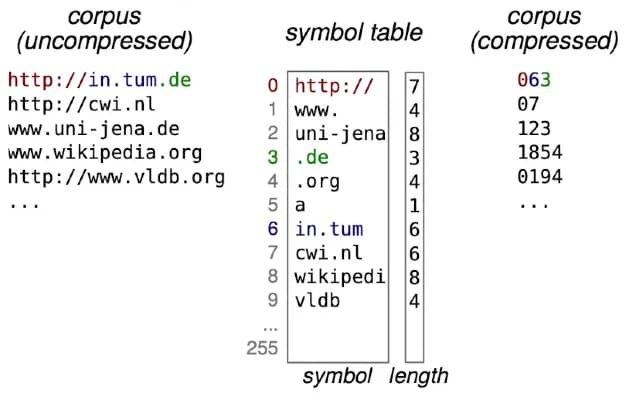
Compressing text with FSST requires you to first build a symbol table, which
like a dictionary is shipped with the actual data to be used at decoding time.
Unlike dictionaries, which only hold whole-strings, the symbols in a symbol
table are short substrings that can occur anywhere in the array. Because most
computers have a native 64-bit word size, we say that a symbol can be between 1
and 8 bytes so that it will always fit in a single register.
To make it easy to pass FSST-encoded data around wherever string data would
usually go, we set a max table length of 256. This ensures that all codes can be
packed into a single byte, allowing our encoding to receive a slice of
u8 and
return a slice of u8.Compression works string-by-string, and proceeds greedily, matching the longest
prefix against the symbol table, and recording the corresponding code into our
output array.
Figure 1 in the paper has an example of what this looks like in practice for a
small URL dataset:
256 codes is a lot, but even with an ideal symbol table, you aren't guaranteed
to be able represent any possible string. For that, we need to reserve code 255
(
0xFF) to represent the escape code. If while compressing we encounter a
substring that does not match any symbol in the table, then we emit each byte of
the substring preceded by an escape byte. When the decompressor sees 0xFF in
the input, it knows to immediately emit the following byte without looking it up
in the symbol table.If you’re following along, you’ll realize then that the worst-case compression
factor is actually a doubling of the input, which we see if we attempt to
compress using an empty symbol table.
For example, the string
“hello” would be compressed into the byte string:Rust
[0xFF, b'h', 0xFF, b'e', 0xFF, b'l', 0xFF, b'l', 0xFF, b'o']
Based on this, we can start to sketch out the codec and array implementations
we’d need to implement FSST decoding with random access:
Rust
struct FSSTArray {
    /// `symbols` stores the symbol table. Each symbol can be a string
    /// of 1 to 8 bytes, which we pack into a u64.
    symbols: Vec<u64>,

    /// The length of each symbol. This vector has the same length
    /// as `symbols`.
    symbol_lengths: Vec<u8>,

    /// The encoded variable-length byte array. bytes[i] is the i-th encoded
    /// string.
    ///
    /// Each encoded string will be a sequence of 8-bit unsigned
    /// integer offsets into the `symbols` table.
    bytes: Vec<Vec<u8>>
}

impl StringCodec for FSSTArray {
    fn decode(&self, index: usize) -> String {
        // Get the compressed value at the index.
        // This is a byte array of codes.
        let codes = self.bytes[index];
        let mut pos = 0;
        let mut result = Vec::new();
        while pos < codes.len() {
            let next_code = codes[pos];
            if next_code == ESCAPE {
                // Emit an escape byte
                pos += 1;
                result.push(code[pos]);
            } else {
                // Lookup the code in the symbol table
                let symbol = self.symbols[code];
                let len = self.symbol_lengths[code] as usize;
                result.extend_from_slice(&symbol.to_le_bytes()[0..len]);
            }

            pos += 1;
        }

        // Convert the UTF-8 encoded bytes into a String for the caller
        String::from_utf8(result).unwrap()
    }
}
Based on these characteristics, we can quickly see that the theoretical
compression factors range from 8—the maximum length of a symbol—to 0.5 in the
case where every byte of a string is escaped. Thus, building a symbol table to
preference long-matches and avoiding escapes is going to be key to both good
compression factors and fast decompression speeds.
A seat at the (symbol) table
FSST compression relies on a generational algorithm for building a symbol table.
In each generation, it uses the current generation’s symbol table to compress a
piece of sample text, then examines the used codes to create a set of new
potential candidate symbols. At the end of the generation, the best symbols are
preserved for the next generation.
We need to be more specific about how we decide the “top” symbols however. In
the paper, the author’s define a new metric for the “effective gain” of a
symbol. A symbol’s effective gain is equal to its length times its frequency
of how it appears in the compressed text. Semantically, this is like the
marginal compression factor of having this one symbol in the table, for the
given piece of text we’re evaluating against.
The algorithm takes 3 parameters:
-
Maximum symbols: how big can the symbol table grow. This is directly linked to the code size. Because we’re using byte codes, this is 255 (leaving the 256th code for an escape).
-
Maximum symbol length: How many bytes can each symbol hold? This was chosen to be 8 bytes so that it can always fit into a single 64-bit register.
-
Number of generations: How many generations does the table selection algorithm proceed for? Because we concatenate symbols at the end of each generation, we must have at least 3 generations to have a chance to generate any 8 byte symbols. The creators of FSST did a lot of empirical testing and found 5 to provide the best balance between speed and compression quality.
Now that we have all of the parameters of the algorithm, we can be a bit more
rigorous in our description of the steps.
First, we initialize an empty symbol table. An empty symbol table will compress
any string it receives into a byte array where each character is preceded by an
escape byte.
For each generation:
-
We compress our target string using our existing symbol table. When we compress, we count the symbols that were used in the encoded output. We also concatenate adjacent symbols as candidates for new symbols to add.
-
For all existing and candidate symbols, we assign them a gain (
count * length), and preserve the top 255 symbols by gain. -
We set the top 255 as the new symbol table to use in the next generation.
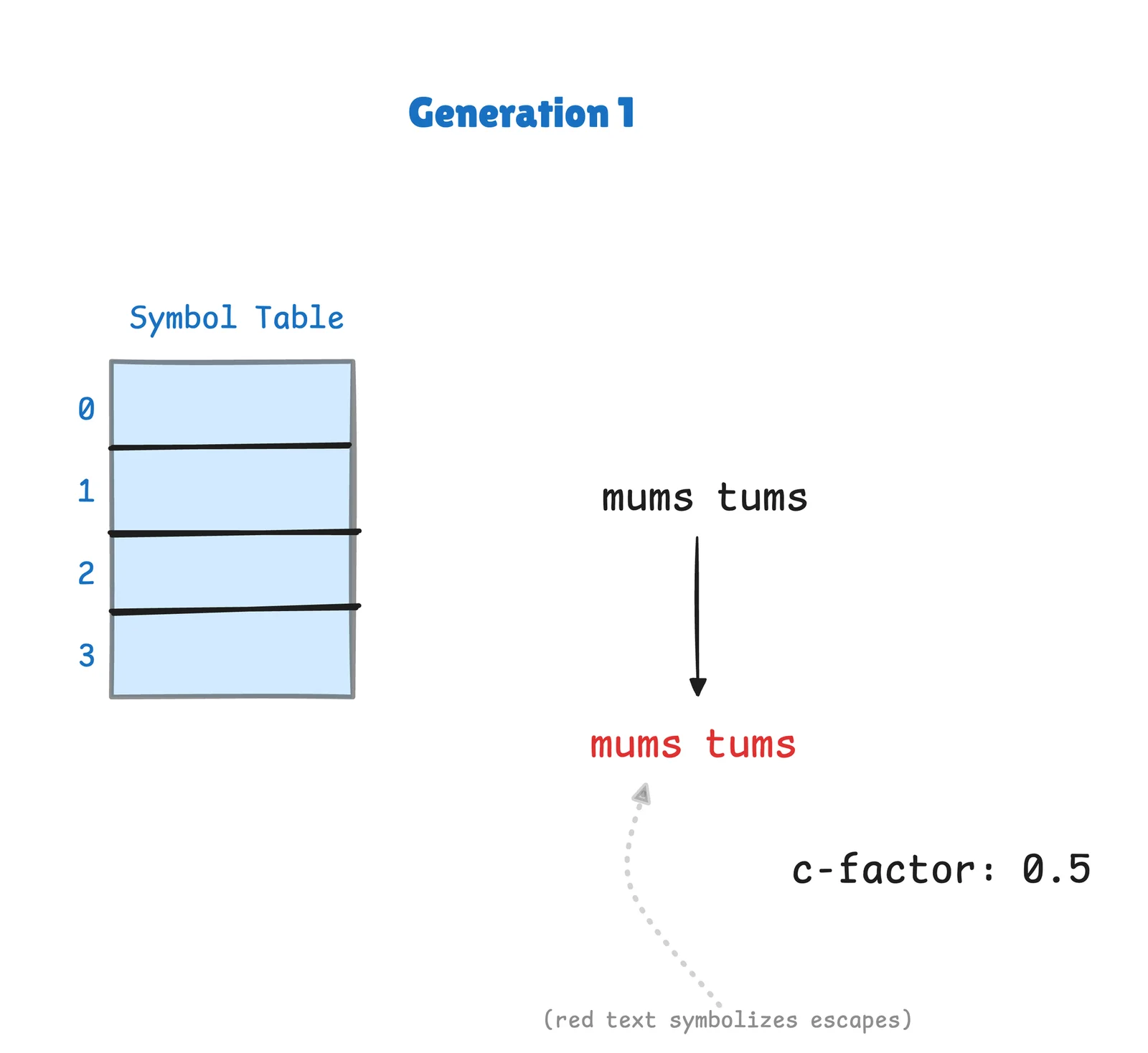
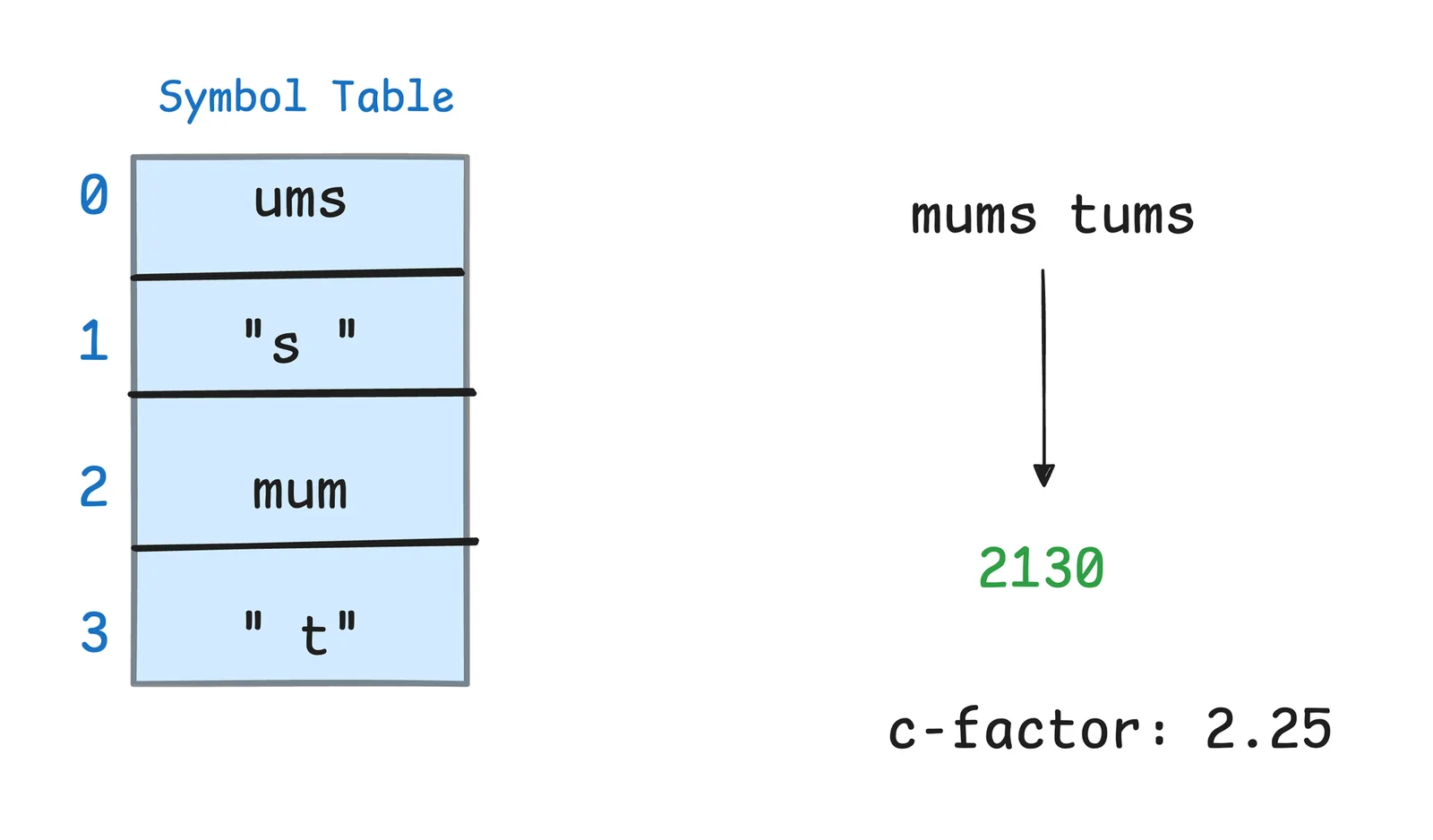
We’ve illustrated a simplified version of the algorithm below. We use a a toy
string
mums tums , and we’ve altered the parameters to make things fit in one
page:-
Maximum symbols: 4
-
Maximum symbol length: 3
-
Number of generations: 2
First comes Step 1: Compress using the existing symbol table. In this case, the
symbol table is initialized to be empty, so this will escape all bytes, doubling
the size of the text!
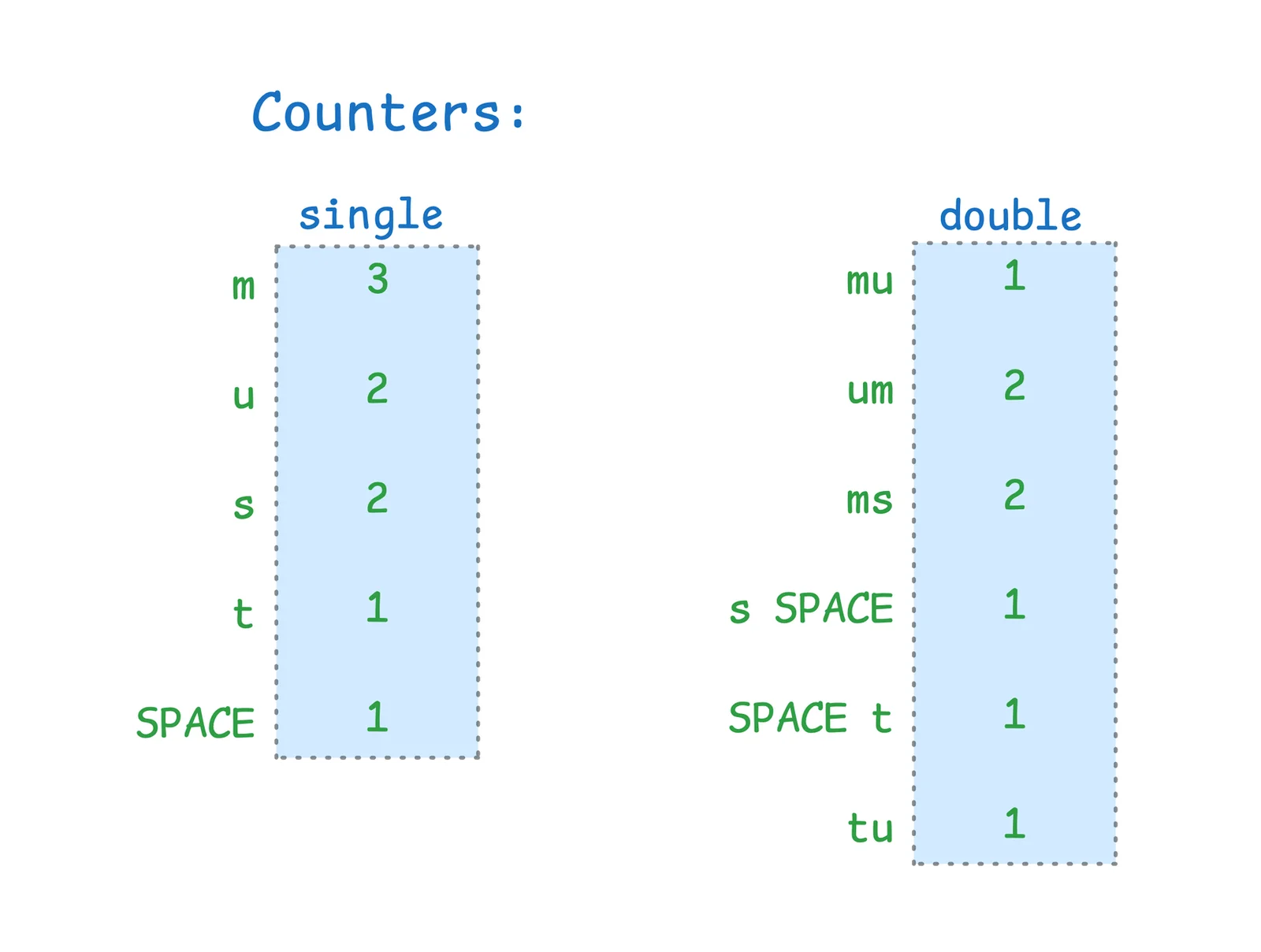
Step 2: Count the symbols that appear in the compressed text. In this case, the
symbols are all single-character escapes. We also count all adjacent pairs of
symbols that appear, as they are good candidates to merge into a single symbol.
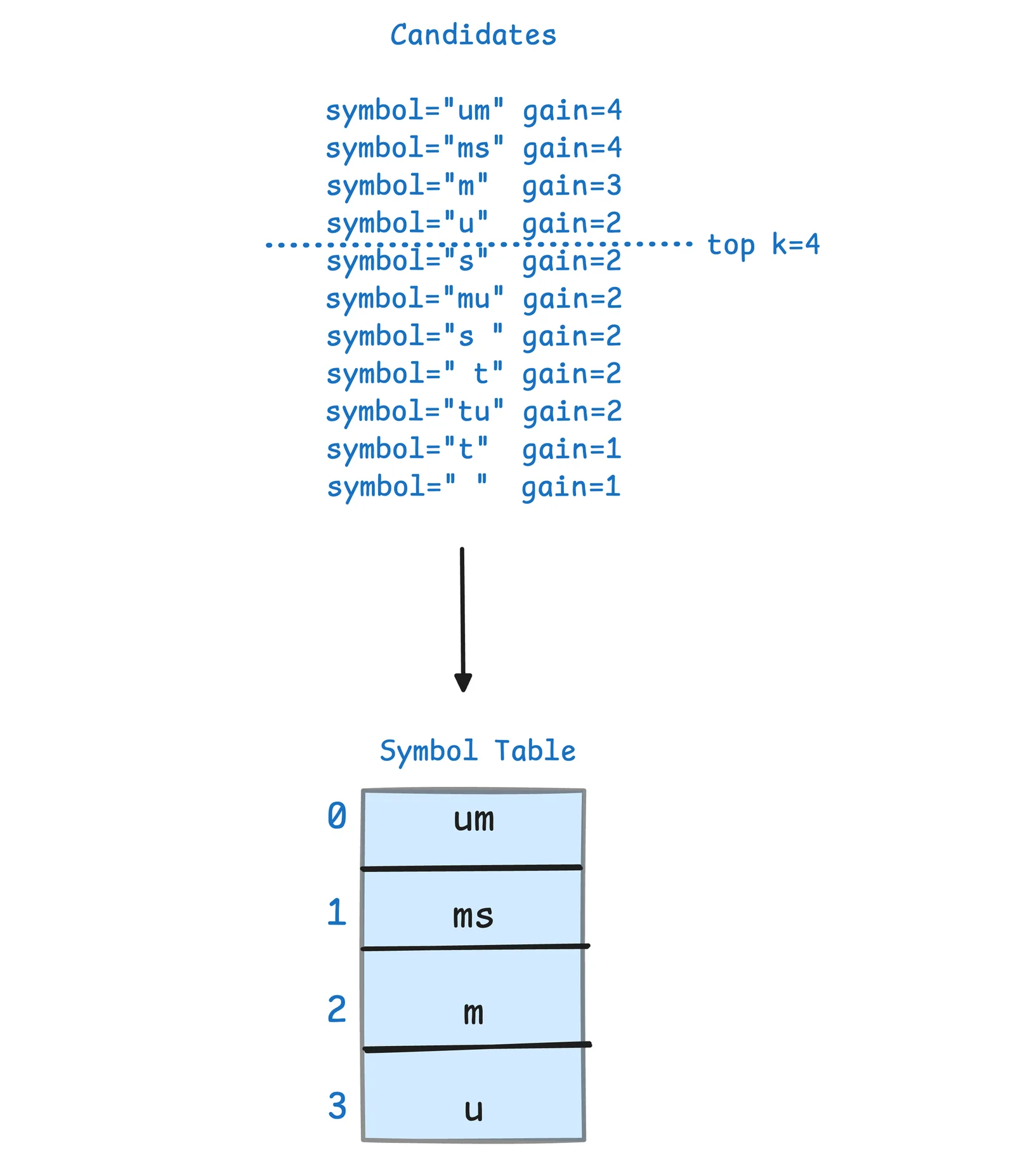
Step 3: Rank the candidates by their effective gain. We preserve the top symbols
(in this toy example, the top four) to use as the new symbol table.
We now have a complete symbol table. We repeat the steps above for the second
generation:
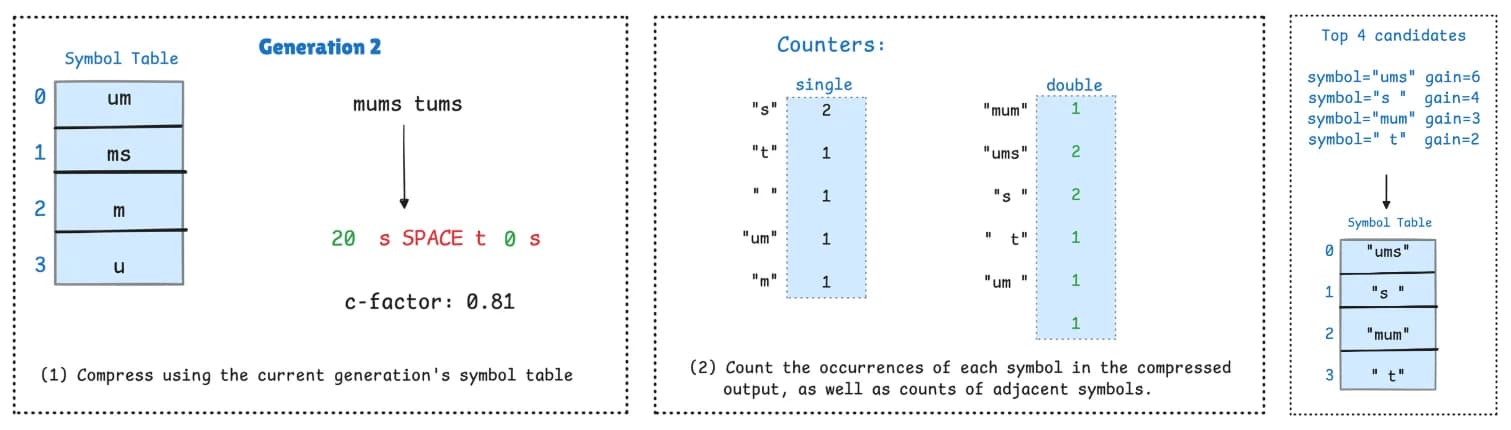
In the first generation, our empty symbol table initially doubles the size of
our output, but over two generations we refine this table, arriving at one that
actually compresses our string by more than a factor of 2!
As mentioned, this was a simplified example meant to strip away details to
clarify the algorithm’s mechanics. There are quite a few moving pieces needed to
actually bring this code to life:
-
Extending support from single-strings to string arrays with many values. The naive way to do this is to call the compression/decompression kernels in a loop. A more advanced variant would compress the entire array range as a single mega-string to avoid branching.
-
Training the symbol table on a whole array forces us to compress the full-size array 5 times, which is slow. Instead, we choose a small fixed-size sample of 16KB, drawn as 512B chunks sampled uniformly at random across all elements of the array. Both 16KB and 512 were chose empirically by the authors as good tradeoffs between locality (longer runs are more realistic representations of the source) and performance (getting a diverse enough sample to train a table that compresses the whole array well).
-
The authors of the paper implemented an AVX-512 compression kernel, which we have not implemented in the Rust code but can lead to better performance over the scalar variant. You can learn more about their “meatgrinder” in Section 5 of the paper.
Closing thoughts
For all the ink spilled in this post, there's still so much we didn't get to
cover. For that, we encourage you to read
the paper
as well as the
Rust code for more
details on the specific tricks needed to make the codec fast enough for use.
We believe that FSST is a great building block for working with string data, and
providing a good wrapper around its power brings us closer to achieving our goal
of making Vortex the absolute best way to build data-intensive applications.
We’re building in the open, so if you’re interested in following along on the
journey, be sure to
check us out on GitHub!